Showing posts with label society. Show all posts

Saturday, September 20, 2014

AEGIS: Malaysia better than the Philippines?

Painfully true . . .

I experienced it first hand.

Actual case 1:
A provincemate with a degree in IT. Now working in KL.
He said KL is much less stressful than Manila. The public tranpsort better, there are public sports facilities all over, bicycle lanes, etc.
Personal income Tax is much lower.

And the positive side is Filipinos are much sought after by multinationals there.

Actual case 2:
During a meeting with an expat working in an industrial development project in the Philippines. He used to work in Malaysia before being tapped for that Philippine project. When our conversation in passing touched the subject of food, he said Malaysian food much is better and he missed it. Wow.


Saturday, August 23, 2014

How to climb a tree . . .

Pinoy ingenuity . . .
A brilliant idea indeed!


Friday, July 25, 2014

Capitalist Socialism

The irony is most socialist objectives are better achieved by capitalistic means . . .

Read this story from http://www.thefinancialist.com/. . .

Inside Singapore’s Success

Photo credit:  http://en.wikipedia.org/

By: Daniel Ammann and Simon Brunner
Published:
When Singapore gained its independence nearly 50 years ago, it was a poor, colonial outpost in a swampland that lacked natural resources. Today, the Southeast Asian city-state of 5.4 million people is wealthier per capita than the United States and Germany. The country’s GDP per capita has risen more than tenfold from $4,756 in 1980 to an estimated $52,179 last year. Last year, the IMF named Singapore the easiest country in the world to do business and number two in competitiveness. Even its airport is taking home gold medals.

How did Singapore become the envy of the world? In many ways, it did what competent governments are supposed to do. Quality public housing? Check. Top-notch public education? Check. An open, pro-business economy? Check. The city-state also continues to develop innovative approaches to challenges such as immigration, taxes and debt. Singaporean Finance Minister Tharman Shanmugaratnam recently sat down with Credit Suisse to explain how the country became the alpha male of the Asian Tigers and a global archetype of economic success.


CS: How has Singapore achieved its economic success?

TS: Singapore’s story can be explained by three factors: the cultural work ethic of Singaporeans, our response to adverse external conditions and our government, especially its education and housing policies. Our approach is to enable people and support a culture of aspiration, work and personal responsibility, rather than have the government taking over responsibility.

CS: Let’s start with culture. Does such a young country have a culture of its own?

TS: Singapore is an accident of history, unlike most nations formed by the will of their people to come together. It was a multicultural and multi-religious society that unexpectedly became an independent country in 1965. We were united not by a common language, as nation-states often are, but by a search to make the most of what we had. What emerged was a social culture based on work.

CS: How have you become attractive to businesses?

TS: Our economic goal, first and foremost, is to create good jobs for our people by helping businesses take advantage of opportunities. We are constantly asking ourselves what the market needs, and how we can develop the capabilities to meet these needs. We want local as well as international companies to find it worthwhile to establish a presence and invest in Singapore.

CS: What are the main factors that make a country “relevant,” as you put it?

TS: I always point first to the skills and expertise of the people. To remain competitive, we must be constantly upgrading those skills. Other priorities must be security, rule of law and political stability. Investors need certainty; they need to know what to expect ten or twenty years from now.

CS: How do you provide that certainty?

TS: We cannot retroactively change laws or rules. We must try to anticipate changes in the international environment and move early. Governments shouldn’t wait until they are forced to take action to meet international norms. Instead, they should evolve and make changes when times are good.

CS: How important have low taxes been to your economic success?

TS: We are able to keep our taxes at a relatively low level only because we keep government spending relatively low as well. In particular, we avoid untargeted subsidies by focusing on helping those most in need. We want to make sure that lower-income people have access to quality education, housing and healthcare. A particularly important factor is that we have no unfunded or unsecured commitments; everything is financed within our current budget or backed by our assets.

CS: There’s no national debt?

TS: There’s no borrowing in the conventional sense, because the government is not allowed to borrow for the purpose of spending or to run deficits in any single legislative period. It borrows only to create a healthy bond market, and the monies raised are invested abroad by our sovereign wealth fund.

CS: Singapore’s foreign population has doubled over the past 30 years. How are you handling the pressures that come with immigration?

TS: We have to stay open, but not blindly so. We are an island, a small nation consisting of a single city. We don’t have the countryside to move to if the city becomes too crowded, or if housing prices exceed what people can afford. That’s why we have immigration strategies that ensure not only that we stay competitive, but that Singaporeans still have a sense that this is our country, with our social customs and values at its core.

CS: You seem to emphasize policymakers’ social responsibilities.

TS: When people look at Singapore from the outside, they often think of it as an economic success story. But at its core, our success is based on social policies and principles. Our education system and our public housing program are the foundations on which our nation is built.

CS: How would you describe Singapore’s educational model?

TS: We have a public education system with meritocratic selection into secondary schools and tertiary institutions. But it is also a system with diverse courses of study, and a strong emphasis on technical courses at the tertiary level. We want to offer everyone a chance to discover what they are good at and learn skills that are worth something in the job market.

CS: Your public housing program has been likened to a socialist experiment.

TS: That’s true, but in our own, unique way. The government decided to provide everyone with access to good living conditions, but also required that people of different races and cultures live in the same neighborhoods. This helped create a common identity, and a common pride in having a home.

CS: What would you say are Singapore’s foundational values?

TS: It may seem like a paradox, but active government support for self-reliance is at the core of our approach. If you work, we’ll reward you with more. You get something more from the government when you take personal responsibility. This is our way of preventing the erosion of work ethic and responsibility that we have seen in many affluent societies.

CS: What did those affluent societies do that you would like to avoid?

TS: Their politicians promised the people social benefits that were simply unsustainable. With each electoral campaign, they added new promises, leaving the bill for subsequent generations. Unfortunately, this hasn’t only had financial consequences, which are now obvious, but it’s also changed social values and norms. The culture of entitlement is now widespread, and will take time to reverse. It’s tragic, particularly for the next generation.  That’s why Europe is in search of new social models. There’s no avoiding that.

To read the original article, click here
.

Friday, June 13, 2014

DOJ backs SIM card registration bills

I fully agree with this  . . .


Photo credit:  http://uthmag.com/


DOJ backs SIM card registration bills

MANILA, Philippines - The Department of Justice (DOJ) has supported bills in the House of Representatives seeking to regulate mobile communication through registration of prepaid SIM cards.
In a two-page legal opinion, Justice Secretary Leila de Lima said she sees nothing wrong with the enactment of the proposed SIM Card Registration Act that will ensure the safety and welfare of the public.
De Lima believes it would aid law enforcers in tracking down criminals who would use mobile phones to commit heinous crimes like kidnapping and bombing.
“We interpose no legal or constitutional objection to the proposed bills which are within the purview of what is embodied in Article II on the Declaration of Principles and State Policies of the 1987 Philippine Constitution, particularly Section 5 thereof, which promotes the maintenance of peace and order, the protection of life, liberty, and property, and the promotion of the general welfare being essential for the enjoyment of all the people,” she said.
The DOJ chief also stressed that the passage of House Bill Nos. 525, 858, 1519, 2444, 2588 and 2642 is within the power of Congress.
“We submit that it is within the power of Congress to enact laws that are for public good so as to ensure that public safety and public welfare are given primordial importance over business interests and personal comfort,” she said.
Headlines ( Article MRec ), pagematch: 1, sectionmatch: 1“We also support the penal clauses indicated in the proposed bills as well as the provisions requiring the confidentiality of personal information which may only be disclosed upon written order of a competent court to ensure that individual rights are still protected from reckless disclosure of information,” she said.
“We also support the penal clauses indicated in the proposed bills as well as the provisions requiring the confidentiality of personal information which may only be disclosed upon written order of a competent court to ensure that individual rights are still protected from reckless disclosure of information,” she said.
De Lima, however, suggested that a consolidated version of the proposed legislation be adopted.
House legislators are eyeing to require the registration of prepaid mobile SIM cards in a bid to promote public safety and prevent crime.
House Bill Nos. 525, 858, 1519, 2444, 2588, and 2642, which will be collectively called the SIM Card Registration Act, would require telecommunication companies to set up a “foolproof system” to identify prepaid mobile subscribers - which account for more than 90 percent of the combined 109 million cellular subscriber accounts of the Philippine Long Distance Telephone Co. (PLDT) and Globe as of June.
Proponents of the bill are looking into registration of prepaid SIM cards as post-paid accounts are already registered with the mobile networks.
Read the original story by clicking here

Friday, May 23, 2014

Poverty Alleviation

No to socialism, Yes to positive social values . . .

Photo credit:  http://events.gsapp.org/


5 Essential Principles of Poverty-Alleviation

When I entered into the life of inner city ministry I moved into an environment that soaked me in a vision of the world that informed our activities. The ministry was called African Caribbean American Catholic Center and it operated in the inner city areas of Southwest Florida. Belonging to the Catholic Diocese of Venice, it was a great place to serve.
There, a call to action was consistent and it was based on wonderful ideas such as “solidarity” and the “care of the poor.” For the most part, activity controlled our life of ministry. Conversation and even an occasional debate occurred but we never arrived at a challenge of our most basic assumptions about the poor and about our activities. I entered the ministry as youth director and I was constantly on the move. Our intentions were good and we thought that they were consistent with loving the poor, as we are commanded. It was as if the power of the will was at the helm and the call of reason was only instrumental.
To read the full article, click here.


Friday, May 16, 2014

Let us shift to the Parliamentary Form of Government

I am convinced the parliamentary form is better than the presidential one.

It is time for the Philippines to try it.  Really try it (not the cosmetic way that Pres. Marcos did before).

Read related article . . .

Photo credit:  http://www.gov.sk.ca/

Dismissing Gridlock: A Case for Parliamentary Systems

BY LEE DRUTMAN • May 06, 2010
One system of democratic government is consistently better, say two political scientists,
and it’s not the one we have in the United States.
Read the original article by clicking here.

Saturday, March 15, 2014

Laws and Applicability

Photo credit:  http://poudreeducationassociation.org

"Impractical Laws are Doomed to Fail"

Friday, February 7, 2014

Strong Regions = Strong Nation

Photo credit:  http://www.bydleni.cz/

The key to understanding and developing the Philippines is in its localities. Because while its national identity is artificial, its regional identities are real . . . the common languages, culture and geography. 

 Unity in diversity . . . a strong Philippines through strong regions.

Friday, January 24, 2014

Social Equality

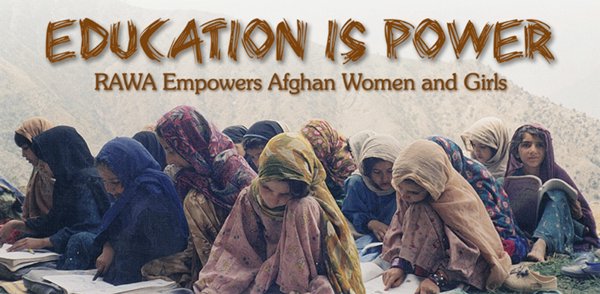
Source:  http://www.rawa.org/x-courses.htm

The way to a more equal society is not socialism/communism.  It is through education within a free and democratic environment . . .

Friday, January 17, 2014

Is Dissynergy the way to go for the Philippines?

Photo credit:  http://mki.wisc.edu/

Synergy is when the result is greater than the sum of the parts. Synergy is created when things work in concert together to create an outcome that is in some way of more value than the total of what the individual inputs is. (source:  about.com)


But for the Philippine setting, "dissynergy" seemed to be the way to go.

Synergy is very valuable but in the case of the Philippines this can work better on the regional level.


The Philippines as a nation is ill-defined and not properly understood.  Aside from the physical characteristic of this country, communication, culture and sense of nationhood is sporadic having scattered areas due to its "archipelagic" nature.  But the regions or provinces have clear identities and have natural sense of community.  This is the strength that the Philippines must tap.  Instead of putting it in a negative light, regionalism should be funneled towards productive patriotic use.

Strong regions/provinces taken together amounts to a strong country.  

Tuesday, January 7, 2014

The Definitions of Lower, Middle, and Upper Class

Overpopulation?  No need to worry for as long as there are employment opportunities that results from good governance and economic policies.
Jobs = low population growth

Video credit: http://www.youtube.com/user/jackomtv

Friday, November 22, 2013

Mother Tongue


If you talk to a man in a language he understands, that goes to his head.
If you talk to him in his language, that goes to his heart.
(Nelson Mandela)

No to Philippine national language
Yes to Philippine languages . . .

Wednesday, November 13, 2013

Typhoon Yolanda

Communication and transport are the major problems among affected areas of typhoon Yolanda. If other countries would help, why don’t we ask for transport helicopters? This way communication with each town can be established and relief goods can be sent soonest . . . just a thought.


Video credit:  Davao City Information Office

Mayor Duterte of Davao City sent help to Tacloban City.  He said  95% of Tacloban is lost.
Actually this is just the “tip of the iceberg” . A lot of towns among Visayan provinces are wiped out!

Friday, October 18, 2013

WORLD BANKER MAKES STUNNING CONFESSION

The future of the world economy will be dominated by Asia.

The Philippines must not be caught sleeping while this huge opportunity is coming upon us . . .


From the You Tube video uploader

- Quote-

THE FORMER PRESIDENT OF THE WORLD BANK, JAMES WOLFENSOHN, MAKES STUNNING CONFESSIONS AS HE ADDRESS GRADUATE STUDENTS AT STANFORD UNIVERSITY. HE REVEALS THE INSIDE HAND OF WORLD DOMINATION FROM PAST, TO THE PRESENT AND INTO THE FUTURE. THE SPEECH WAS MADE JANUARY 11TH, 2010. THE NEXT 19 MINUTES MAY OPEN YOUR MIND TO A VERY DELIBERATE WORLD!

HE TELLS THE GRAD STUDENTS WHAT'S COMING, "A TECTONIC SHIFT" IN WEALTH FROM THE WEST TO THE EAST. BUT HE DOESN'T TELL THE STUDENTS THAT IT IS HIS INSTITUTION, THE WORLD BANK, THAT'S DIRECTING AND CHANNELING THESE CHANGES.

WOLFENSOHN'S OWN INVESTMENT FIRM IS IN CHINA, POISED TO PROFIT FROM THIS "IMMINENT SHIFT" IN GLOBAL WEALTH.

- Unquote -

Friday, October 4, 2013

My Money Story: Bo Sanchez

Actually one's station in life is not determined by the government or by other people.  It is determined by your own efforts and resolve . . .


Sunday, September 8, 2013

Presidential System: Electoral College

Photo credit:  http://questgarden.com/

The President and Vice-President of the United States are voted indirectly by the people via the electoral college.  This is similar to the Parliamentary system.  Could this be the reason why the Presidential form works better in the U.S.A than in the Philippines?

Reference:  http://en.wikipedia.org/wiki/Electoral_College_(United_States)


Related posts on facebook:


Saturday, April 20, 2013

Political Bashing

Originally posted at http://scopemix.wordpress.com/

Photo credit:: Washington Secretary of State Blogs
Politics is not just about politicians.  It is more about the people, the electorate.  Those who have a lot to say against politicians should study first the character of its people, the electorate.

Topic Labels

Message to the Readers

Politics for Philippine Progress. What i do is share and promote ideas for a better Philippines and use politics as a tool for development.

Oftentimes social reforms are controversial, so kindly read my opinions and ideas with an open mind. Sometimes I am unable to get my message across clearly, so please feel free to ask me to clarify.

You can reach me via stevenegay@yahoo.com