A brilliant idea indeed!
Showing posts with label education. Show all posts
Showing posts with label education. Show all posts
Saturday, August 23, 2014

Friday, August 8, 2014
How to help?

Photo credit: http://buildingmarkets.org/
Cost-benefit analysis . . .
Setting limited doable priorities . . .
For the world, the recommendation is to focus on the following . . .
1. Reduce malnutrition. When children get better food, they develop their brains, stay in school longer and end up becoming far more productive members of society. Every dollar spent to alleviate malnutrition brings $59 of benefits.
2. Tackle malaria and tuberculosis. These two diseases debilitate huge populations in poor countries, but they are largely preventable and curable. In the most harshly affected countries, two people often do one person's work because one of them is sick. Benefit to cost ratio: 35 to 1.
3. Boost preprimary education, which costs little and has lifelong benefits by getting children started on learning. 30 to 1.
4. Provide universal access to sexual and reproductive health, which would save the lives of mothers and infants while enabling women to be more economically productive. It would also lower birthrates (when fewer children die, people have fewer children). Benefits could be as high as 150.
5. Expand free trade. This isn't considered sexy in the development industry, and it may seem remote from humanitarian issues, but free trade often delivers phenomenal improvements to the welfare of the poor in surprisingly quick time, as the example of China has demonstrated in recent years. One of the discoveries of the Copenhagen Consensus process is that incremental goals such as expanding free trade are often better than supposedly "transformational" goals. A successful Doha Round of the World Trade Organization could deliver annual benefits of $3 trillion for the developing world by 2020, rising to $100 trillion by the end of the century.
Read the rest of the article by clicking here.
Friday, January 24, 2014
Social Equality
Source: http://www.rawa.org/x-courses.htm
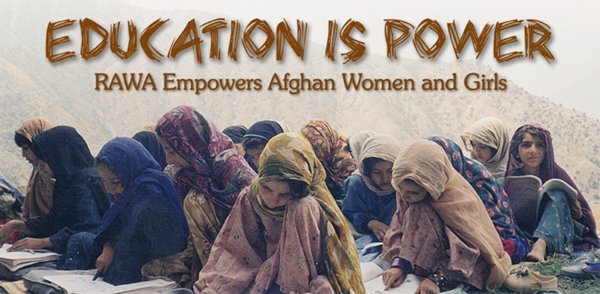
The way to a more equal society is not socialism/communism. It is through education within a free and democratic environment . . .
Tuesday, January 7, 2014
The Definitions of Lower, Middle, and Upper Class
Overpopulation? No need to worry for as long as there are employment opportunities that results from good governance and economic policies.
Jobs = low population growth
Video credit: http://www.youtube.com/user/jackomtv
Friday, October 4, 2013
My Money Story: Bo Sanchez
Actually one's station in life is not determined by the government or by other people. It is determined by your own efforts and resolve . . .
Friday, July 27, 2012
K to 12
This article was originally posted at http://scopemix.wordpress.com/
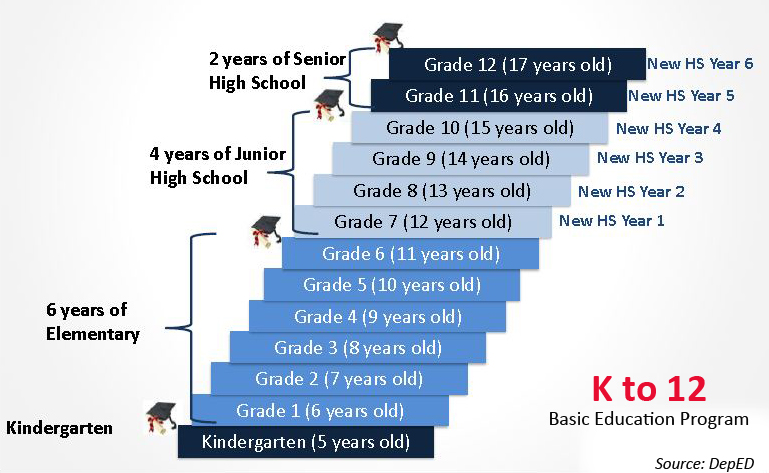
The K to 12 program of the Department of Education will improve the credibility of our high school and college diplomas.
The K to 12 program of the Department of Education will improve the credibility of our high school and college diplomas.
No need for further debates.
Friday, June 1, 2012
The time to end discriminations against Visayans is coming
Originally posted at http://scopemix.wordpress.com/
This kind of lines in movies and television shows should be banned as it is teaching bigotry to our young kids (including Tagalog kids). Not a wise way to build unity among Filipinos . . .
This kind of lines in movies and television shows should be banned as it is teaching bigotry to our young kids (including Tagalog kids). Not a wise way to build unity among Filipinos . . .
Friday, April 27, 2012
Language and Unity
Originally posted at http://scopemix.wordpress.com/


Photo credit: http://www.press.uchicago.edu/
Before, i used to think that the reason for the lack of unity of the Filipinos is its diversity in languages. But now i realized that this is not so after learning that Switzerland has no national language . . . but instead has all its multiple languages as official languages.
I realized that it is actually our misguided national language policy that is ironically one of the culprits for this lack of unity. If we don’t have a national language and instead recognize our many ethnic languages as official, we can unlock the magic of cooperation that could come naturally from people liberated from oppression.
We should open our eyes and accept the reality of our diversity. This should be treated as a cultural asset instead of a hindrance towards communication with each other. We have all the existing means to communicate with each other without inventing a new one like the “Filipino” language.
Unity in diversity.
Friday, March 30, 2012
Some Simple Facts

Photo credit: http://keychangenow.com/
We Filipinos often say (often with pride) that our country the Philippines is composed of more than 7,100 islands.
Well, we have more than 170 languages, isn’t it something to be proud of also?
Isn’t it an indication of the richness of our culture?
Friday, January 27, 2012
Its time to abolish Tagalog (Filipino) as a National Language 2
This article was originally posted at http://scopemix.wordpress.com/

Photo credit: http://nasaspainako.blogspot.com/
The policy of having Filipino (Tagalog) as a national language is a denial of reality. The reality of which are as follows:
1. That its just foolish to invent another language when you already have more than 100!
2. That in the case of the Philippines, the Tagalogs did not conquer the others and they are not even the majority ethnic group populationwise! China mandated Mandarin as national language. But why not as it is the language of the Qin . . . the kingdom that conquered the others and united China under one control. It is also the mother tongue of majority of the Chinese people.
3. That we have more than 100 languages. Due to the national language policy it is no wonder that most Filipinos are ignorant of this reality. This policy is an impediment towards the correct understanding of what our identity really is. Oh, did i just remember somebody wrote a book entitled ”Philippines Damaged Culture?”. For the non-Tagalogs isn’t it confusing to study our history (Araling Panlipunan) using Tagalog, and the topic is Lapu-lapu, Dagohoy, Diego Silang, Gabriela Silang, Juna Luna, Antonio Luna, Sultan Kudarat, etc. . . . for the innocent kids many are mislead into thinking these people are Tagalogs! Why can’t we just simply abolish Tagalog as national language then emphasize to our students the diversity of our languages, a diversity that is not a hindrance but an asset to the richness of our culture! Unity in diversity! Vive la difference as the French would say! We should embrace these differences!
Saturday, April 9, 2011
Ethno-linguistic Discrimination: Colonial Mentality or Simple Ignorance?
Originally posted at http://scopemix.wordpress.com/


Photo credit: http://www.rock.co.za/
Good governance is a big wide topic and just thinking how to put your thoughts into words can be overwhelming. While waiting for that “inspiration” to write on that subject, please allow me to touch on other matters also. Like this one . . .
Many may not be aware that Philippine languages or dialects are syllabaric instead of phonetics.
In syllabaric languages, generally the pronounciation has no effect on the meaning of a word. In phonetic languages like English, the meaning of a certain word becomes different even with a slight change in pronounciation.
Example of syllabaric (Filipino):
Female can be pronounced in Tagalog as baba-e or baba-i. The sounds are different specifically on the stress on the last syllable. But regardless, the meaning is the same.
Female can be pronounced in Tagalog as baba-e or baba-i. The sounds are different specifically on the stress on the last syllable. But regardless, the meaning is the same.
Example of phonetic (English):
On the other hand in English, the word see (si) and say (sey) have different pronounciations. And the meanings are different.
On the other hand in English, the word see (si) and say (sey) have different pronounciations. And the meanings are different.
But many Filipinos discriminate against other ethnic Filipino groups due to language accent differences. An example is the Tagalogs discriminating against the Visayans. The latter when talking in Tagalog brings with them their accent. But no matter, when the Visayans speak in Tagalog, they can be clearly understood. The reason is Tagalog like the Visayan dialect is syllabaric. No matter which syllable in a certain word you put the stress, the meaning does not change.
The question now is what is the cause of this discrimination? Is it because the Tagalogs mistook their dialect as phonetic like English? Is it the reason why those who live particularly in urban areas (they think they are civilized) takes pronounciation carefully when speaking in Tagalog? By the way, are they not aware that some Tagalog groups (an example are those who live in some remote parts of Rizal province) when speaking in their own native Tagalog, pronounce words the same way as the Visayans?
Anyway, similar discriminations also happen within the same ethnic groups . The divide is simply whether one is from the city or from the rural areas.
An example is a City Cebuano discriminating against the Rural Cebuano. Like the City Tagalogs, the City Cebuano also takes pronounciations carefully when speaking in their dialect. Are they thinking also that Cebuano is a phonetic language? It is not difficult to imagine that the same happens between City Ilokanos against Rural Ilokanos . . . and so on.
This is only an observation. It is desirable to eliminate discriminations, but like ignorance, it cannot go away completely . . . even among the “civilized”.
Sunday, March 13, 2011
Reproductive Health Bill
This article was originally posted at http://scopemix.wordpress.com/


Photo credit: http://dalubhasangpinoy.files.wordpress.com/
Basically I agree with the aims and objectives of the proponent of this bill.
However, I disagree with its enactment into law.
Why?
My reasons:
1. This is redundant and unnecessary expense on the part of the government because birth control methods like condoms, pills and others are already available. Our government is already wasting a big chunk of its budget in nonsense programs, let us minimize it as much as possible so we can plow the savings to programs that matters most.
2. It is my observation that the best way to control population growth is through the indirect method.
What do I mean by indirect method?
For me, the indirect method hinges mainly in giving employment to as many people as much as possible, especially women. Sounds odd to solve this problem, but have you observed that most women who have regular “8 to 5 jobs” (factory workers and sales ladies among them) have a tendency to have fewer children? Is it because they are more conscious about getting pregnant as this would affect their work? Is this the reason why most highly developed economies like Japan, Singapore, South Korea and Western European nations have negative or limited birth rates? You seldom see “istambays” in these countries.
Poor governance rather than the size of the population is the cause of poverty. In fact, the size of population is now the source of economic strength of China, India and Indonesia. But their economic growth is not due to population size per se but due to economic reforms and better governance. Even the Philippines WITHOUT an RH Bill is having positive economic prospects due to President Noynoy’s “Matuwid na Daan”.
China is going to be an interesting test case. Their government’s one-child policy (a direct top-down approach similar to the RH Bill) has not curved population growth. But ironically, their new found economic prosperity will … as what happened to Japan, South Korea and the prosperous European nations.
We don’t have to go far. Just look at the contrast between the population growth rate of busy and prosperous subdivisions against the idle and poor slums.
Okay, so this is a matter of creating more employment. The question now is how do you create more jobs?
Well, the answer is simple but complicated.
What?
The simple answer is good governance.
But it is complicated as this would lead us to another question. A question that begs for a complex answer.
But it is complicated as this would lead us to another question. A question that begs for a complex answer.
The new question is what is good governance?
For my views on good governance, please see my other blogs . . .
Related articles: The Chosen People by Roberto de Ocampo
Subscribe to:
Posts (Atom)